
Emergent Science: Multi-Cancer Early Detection Tests

Share

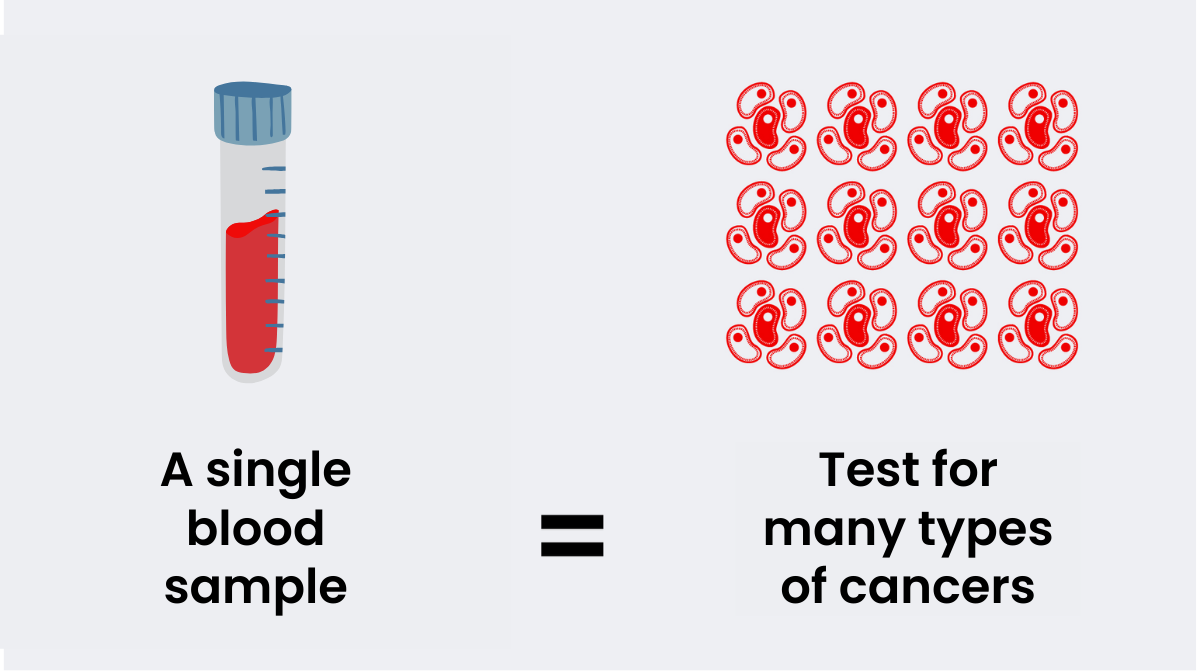
Early screening for cancer is important because when detected at later stages, treatments are more limited, and outcomes are generally poorer. While more research is needed to assess the impact on outcomes, newer, innovative multi-cancer screening technology may have the potential to detect more cancers at earlier stages. Several private and academic entities are currently developing multi-cancer early detection blood-based tests. Published data indicate that some of these tests can screen for many cancers at the same time, including some rare cancers.

They call it a Multi-Cancer Early Detection (MCED) test. We call it a potentially innovative, game-changing advancement for cancer patients.

Now we need to ensure that, if approved by the FDA and shown to have clinical benefit, millions of people, especially older Americans at higher risk for cancer, will have the test covered by their health insurance plan. We are asking Congress to pass legislation that lays the groundwork for this to happen.


View the current map of lawmakers across the country who support the MCED Act.
Take Action

Volunteer using their phone

Urge your members of Congress to support groundbreaking cancer early detection innovation

Groundbreaking new technology will allow more people to diagnose cancer early and survive the disease. 

Latest Updates

January 20, 2026
National

Today, the Congressional Appropriations Committees released the FY2026 Labor, Health and Human Services, Education and Related Agencies appropriations bill that reaffirms the bipartisan commitment to advancing cancer research and saving lives by continued and increased funding for the National Institutes of Health (NIH) and the National Cancer Institute (NCI).

September 17, 2025
National

Today, the U.S. House Committee on Ways and Means is expected to mark up the Nancy Gardner Sewell Medicare Multi-Cancer Early Detection (MCED) Screening Coverage Act (H.R. 842).

September 15, 2025
National

As the September 30th government funding deadline nears, more than 700 cancer patients, survivors and advocates from every corner of the United States, including Washington, D.C., Guam, and Puerto Rico, are heading to Capitol Hill to make their voices heard. They will ask lawmakers to prioritize cancer research and prevention programs, along with other proven cancer-fighting policies, highlighting the real-life impact these investments have on patients, families and communities nationwide.

June 4, 2025
National

A bill introduced earlier this year in the House and Senate now has the bipartisan support of the majority of the members in each chamber.

Emergent Science: Multi-Cancer Early Detection Tests Resources

ACS CAN joined with 50 other organizations to applaud Representatives Jodey Arrington (R-TX) and Terri Sewell (D-AL) for sponsoring and prioritizing the passage of the Nancy Gardner Sewell Medicare Multi-Cancer Early Detection Screening Coverage Act (H.R. 842).

The following chart is a section-by-section summary of the MCED legislation, comparing the legislation introduced in the 118th Congress with the version introduced in the 119th Congress.

Earlier screening for cancer is important because when detected at later stages, treatments are more limited, and outcomes are generally poorer. Medicare enrollees should have access to multi-cancer screening tests when the benefit is clinically shown.