State Rep. Amanda Nedweski Receives National Distinguished Advocacy Award for Leadership on Lifesaving Breast Cancer Screening Legislation
KENOSHA, Wis. – Wisconsin State Rep.

MONTGOMERY, Ala. – Cancer advocates from across the state gathered at the Alabama State House on March 31 to celebrate the passage of new laws aimed at reducing cancer disparities and saving lives. The policies, championed by the American Cancer Society Cancer Action Network (ACS CAN), will increase access to crucial cancer care for Alabamians who have state-regulated health insurance plans.
For many Black families in Alabama, cancer has taken a devastating toll, often because diagnoses come too late. Out-of-pocket costs can be a significant barrier to accessing cancer screening and early detection services. The David Mac McElhaney and Roy S. Johnson Prostate Cancer Prevention Act, which takes effect on October 1, 2027, removes cost barriers for prostate cancer screenings for high-risk men over 40, including Black men and those who have one or more first-degree relatives (such as a father, brother or son) with a prostate cancer history.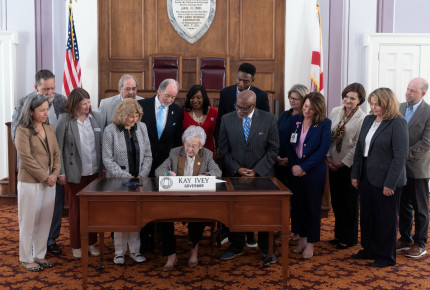
“My father died of prostate cancer when I was 11 years old, so my own diagnosis did not surprise me,” said Johnson, the Birmingham-based and renowned columnist for whom the new law is named. “I’m humbled and honored that my efforts to get this bill passed and signed into law are recognized in a fashion that honors not just me, but also my father. My faith, years of annual checkups and prostate cancer tests, and my early diagnosis will help me beat this disease and be here for my family for many years to come.”
Black men in the U.S. have among the highest documented prostate cancer incidence rates in the world, with 1 in 6 expected to be diagnosed during their lifetime and more than twice as likely to die from the disease as White men.
“When prostate cancer is caught early, there is nearly a 100% chance of survival,” said Jane Adams, government relations director for ACS CAN in Alabama. “Increasing access to prostate cancer screenings is crucial to saving lives, and we applaud the state legislature for recognizing that.”
A second measure, House Bill 300, signed into law in early March, will help ensure women no longer face out-of-pocket costs for follow-up diagnostic breast imaging after an abnormal mammogram. While screening mammograms are free to most insured women starting at age 40, follow-up tests, needed to confirm or rule out cancer, often result in unexpected costs.
“When detecting cancer early can make the difference between life and death, no woman should have to choose between paying bills or getting the follow-up care she needs,” said Ella Perry, breast cancer survivor and ACS CAN volunteer.
Although Black women are diagnosed with breast cancer at lower rates, they are 37% more likely to die from the disease than White women, making timely screening and follow-up care especially critical. This new law will take effect on January 1, 2027.
Researchers are also working to understand why and how different cancers disproportionately affect underserved communities. During the event, more than 50 cancer researchers from Alabama State University (ASU), University of Alabama at Birmingham, Auburn University and the University of Alabama participated in a symposium showcasing the state’s cutting-edge advances in the fight to end cancer and the importance of research funding.
Jessica Barnes, who is pursuing a master’s degree at ASU, made a presentation on her research on cholangiocarcinoma, a rare and aggressive cancer that forms in the bile ducts.
“I lost my father to cholangiocarcinoma, so I’m now researching its risk factors; specifically, whether exposure to tobacco can be linked to it. I want to do my part in helping save lives from this disease,” said Barnes. “As I was grieving this huge loss in my family, it was clear to me that research is key to finding new and better ways to prevent, detect and treat cancer; and that is how I want to contribute to my community.”