Rep. Juan Ciscomani Discusses Healthcare with Cancer Advocates Ahead of Election
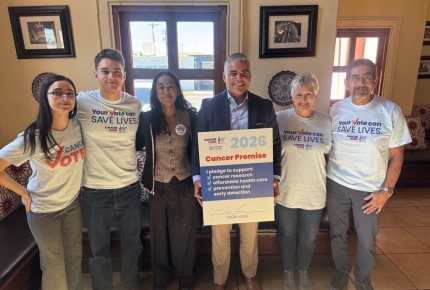 On Friday, volunteer advocates with the

WASHINGTON, D.C. – A new joint report released today by the American Cancer Society Cancer Action Network (ACS CAN) and the Alliance for Childhood Cancer examines the current state of childhood cancer and outlines challenges and opportunities related to pediatric cancer research and drug development. The report, “Pediatric Cancer Landscape 2026,” is a follow-up report to the “Translating Discovery into Cures for Children with Cancer: Childhood Cancer Research Landscape Report,” which was the first publication of its kind when it was released 10 years ago. This new iteration has been released alongside policy recommendations to address the unique challenges pediatric cancer research presents.
Despite substantial advances in pediatric cancer research and clinical care over the past decades, significant challenges remain. Cancer continues to be the leading disease-related cause of death for children and adolescents aged 1-19 and, as the report highlights, progress in survival rates has not been consistent for all cancer types. Further, pediatric cancer patients and survivors deal with long-term side effects that can affect their health, decrease life expectancy and impact quality of life for decades.
Policymakers can help drive future progress by supporting policy changes recommended alongside this report. These priorities include sustaining robust federal and state pediatric cancer research, promoting investment in data-sharing infrastructure, addressing regulatory and administrative barriers to pediatric clinical trials and ensuring sufficient incentives to drive pediatric cancer drug development.
“We know that hearing the words ‘your child has cancer’ is a uniquely terrifying, life-altering moment for any family,” said Lisa Lacasse, president of ACS CAN. “Because pediatric cancer strikes so early in life while young bodies are still growing and developing, it presents enormous and unique challenges. Improving treatments and finding cures demands targeted policy solutions. ACS CAN urges lawmakers to advance these policy recommendations to save lives and improve outcomes and quality of life for children with cancer and survivors.”
The report notes that because many of the various diseases that make up pediatric cancer are unique and relatively rare, it is difficult but essential to gather and analyze large amounts of data to generate research insights. A key takeaway is that enhanced data collection with appropriate privacy and consent controls combined with the responsible application of artificial intelligence have the potential to uncover meaningful patterns, ease the burden of data-intensive research, test hypotheses and accelerate discoveries that benefit pediatric cancer patients and their families.
Research and drug development remain expensive and resource-intensive, requiring significant investment to transform discoveries into treatments that improve outcomes for children. Since children’s bodies are biologically and physiologically unique, findings from adult cancer research often do not apply to children, meaning dedicated pediatric cancer research is needed. Current market incentives do not encourage the same level of private investment in childhood cancer research and drug development as adult research. This is an issue that needs to be addressed.
“Understanding the unique aspects of pediatric cancer and the associated research challenges can help guide efforts to overcome barriers and develop better treatments for children,” said Michael Link, M.D., Lydia J. Lee Professor of Pediatrics at Stanford University School of Medicine and co-chair of the Alliance for Childhood Cancer. “This report makes clear that the collective engagement of children, families, researchers, industry and government are critical to make significant progress possible, save lives and improve quality of life into survivorship.”
The American Cancer Society estimates that in 2026 in the U.S. there will be 9,680 new childhood cancer cases and 1,090 cancer deaths among children (ages 0-14). Among adolescents (ages 15-19), there will be an estimated 5,660 new cancer diagnoses and 730 cancer deaths. The full report and its corresponding policy recommendations are available HERE.
###
On Friday, volunteer advocates with the