**MEDIA ADVISORY FOR SATURDAY EVENT**
HUNTSVILLE, Ala. – Cancer patients, survivors and loved ones will gather Saturday at 6 p.m. for the first Hope Run to celebrate cancer survivorship and honor those who’ve passed away from the disease.

With the imminent release of Governor Wes Moore’s executive budget proposal, cancer survivors are increasingly anxious about what this budget will mean for three key line items. They are hopeful that the state restores funding for the tobacco control program and maintains its investments in the Breast and Cervical Cancer Diagnosis and Treatment Program (BCCDT) as well as ongoing research at the University of Maryland Medical System Stewart Greenebaum Cancer Center and the Johns Hopkins University Sidney Kimmel Cancer Center. Their message to the governor and General Assembly: cancer prevention and early detection and the research behind modern screening, treatment and prevention tools are critical in the fight against cancer.
For decades, fact-based prevention and cessation programs and the BCCDT have helped Marylanders prevent cancer and catch it early. Last year, lawmakers decreased the state’s investment in tobacco control by $5 million. Survivor advocates are worried they will repeat such cuts. This fear extends to the BCCDT, which provides lifesaving care to low-income, uninsured and under-insured Marylanders, connecting thousands across the state to a critical safety net they otherwise would not have. Breast and cervical cancer survivors, especially, are worried about what the budget deficit will mean for the continued ability of the BCCDT, which is already under-resourced, to save lives from breast and cervical cancer.
“We know that strong tobacco control policies and sustained investment in prevention save lives by reducing cancer risk before it starts,” said Lance Kilpatrick, government relations director for the American Cancer Society Cancer Action Network (ACS CAN) in Maryland. “Where we cannot wholly prevent cancer, we can catch it early through programs like the Breast and Cervical Cancer Diagnosis and Treatment Program. Whether or not the state adequately invests in these lifelines will be the difference-maker for countless Marylanders. I hope state leaders understand the stakes and put forward a budget that reflects them.”
Shortly after the formation of the BCCDT, the state expanded its investment in the fight against cancer by allocating a small portion of the budget to advance the cutting-edge research being done at the University of Maryland and Johns Hopkins University cancer centers. Since then, cancer deaths have steadily gone down. Upwards of 400,000 Marylanders would not have survived their diagnosis 25 years ago if not for the work of cancer researchers. Now, with federal cancer research funding in limbo, advocates are looking to state leaders to champion progress where D.C. may not and commit to continued funding.
“Lives are at risk,” said Kilpatrick. “Over 11,000 Marylanders will die from cancer this year alone. But with over 100,000 cancer survivors alive in Maryland today, we know that past investments in cancer research have made a real difference. Continued investments in research hold the key to saving more lives and, one day, ending cancer as we know it, for everyone.”
###
About ACS CAN
The American Cancer Society Cancer Action Network (ACS CAN) advocates for evidence-based public policies to reduce the cancer burden for everyone. We engage our volunteers across the country to make their voices heard by policymakers at every level of government. We believe everyone should have a fair and just opportunity to prevent, detect, treat, and survive cancer. Since 2001, as the American Cancer Society’s nonprofit, nonpartisan advocacy affiliate, ACS CAN has successfully advocated for billions of dollars in cancer research funding, expanded access to quality affordable health care, and advanced proven tobacco control measures. We stand with our volunteers, working to make cancer a top priority for policymakers in cities, states and our nation’s capital. Join the fight by visiting www.fightcancer.org.
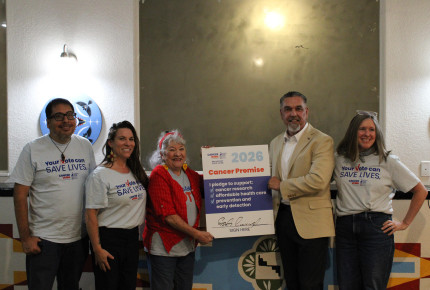 On Tuesday, volunteer advocates with the Ameri