**MEDIA ADVISORY FOR SATURDAY EVENT**
HUNTSVILLE, Ala. – Cancer patients, survivors and loved ones will gather Saturday at 6 p.m. for the first Hope Run to celebrate cancer survivorship and honor those who’ve passed away from the disease.

WASHINGTON, D.C. – Today, the Congressional Appropriations Committees released the FY2026 Labor, Health and Human Services, Education and Related Agencies appropriations bill that reaffirms the bipartisan commitment to advancing cancer research and saving lives by continued and increased funding for the National Institutes of Health (NIH) and the National Cancer Institute (NCI).
The bill includes: $47.2 billion for NIH, which is a $415 million increase as compared to FY25 funding, including $7.352 billion for NCI, which is an increase of $128 million. This funding strengthens the nation’s ability to pursue lifesaving breakthroughs, accelerate innovation and ensure patients and families benefit from the most advanced cancer prevention, detection and treatment. Congress also prioritized advances in the childhood cancer fight with important funding for research and policy changes that will improve access to care, and funded increases in cancer prevention, including funding for the National Breast and Cervical Cancer Early Detection Program and maintained funding for tobacco control.
The bill also includes language based on the Nancy Gardner Sewell Medicare Multi-Cancer Early Detection (MCED) Screening Coverage Act. The legislation would allow Medicare to cover MCED tests once the tests have been approved by the Food and Drug Administration (FDA) and clinical benefit has been shown.
“We applaud Congress for working together across party lines and standing strong in the fight against cancer by investing in hope, science and saving lives,” said Shane Jacobson, CEO of the American Cancer Society Cancer Action Network (ACS CAN). “This bipartisan commitment to NIH and NCI funding will fuel discoveries that bring us closer to cures and ensure patients today, and in the future, have access to better treatments and outcomes.”
“With this bill, Congress sent a clear message that fighting cancer remains a national priority,” said Lisa Lacasse, ACS CAN President. “We are particularly grateful to Appropriations Chairs Susan Collins (R-ME) and Tom Cole (R-OK), and Ranking Members Patty Murray (D-WA) and Rosa DeLauro (D-CT), as well as Subcommittee leaders Sens. Shelley Moore Capito (R-WV) and Tammy Baldwin (D-WI) and Rep. Robert Aderholt (R-AL) – all of them have been champions of cancer research.”
Additionally, the inclusion of the MCED Act has the potential to make a meaningful difference in the lives of people with Medicare coverage and their families. This legislation, which ACS CAN has long advocated for, creates a pathway to ensure timely Medicare coverage of new, innovative multi-cancer screening tests, once FDA approved and clinical benefit shown, which can greatly expand access to early detection.
“We are extremely grateful for the bipartisan work done by Representatives Jodey Arrington (R-TX) and Terri Sewell (D-AL) while championing MCED through the House as well as Senators Mike Crapo (R-ID) and Mike Bennet (D-CO) for their leadership in the Senate,” said Lacasse. “ACS CAN also extends its deepest gratitude to the thousands of advocates and volunteers who shared their personal stories with lawmakers throughout the appropriations process.”
“The courage and dedication of these patients, survivors, caregivers and families made a real difference as their voices highlighted the real-life impact that cancer prevention and research funding has on communities across the country,” said Jacobson. “We strongly urge lawmakers to pass this year-end package which brings us one step closer to ending cancer as we know it, for everyone.”
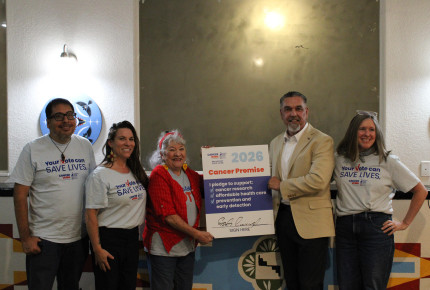 On Tuesday, volunteer advocates with the Ameri