
Cancer Prevention Press Releases
 On Tuesday, Tammy Moyl
Proposed Changes to Immunization Requirements for Florida Schools Put Cancer Patients and Survivors at Risk
ACS CAN provided testimony opposing the Florida Department of Health’s proposed revisions to Rule 64D-3.046, which would remove hepatitis B, varicella (chickenpox), Haemophilus influenzae type b (Hib) and pneumococcal conjugate vaccines from Florida’s school and childcare entry requirements.
Rep. Juan Ciscomani Discusses Healthcare with Cancer Advocates Ahead of Election
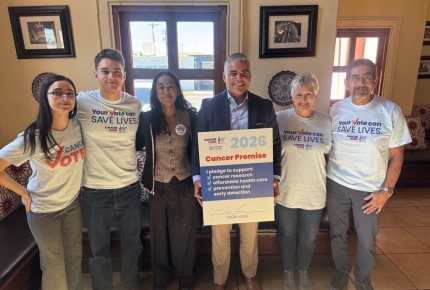 On Friday, volunteer advocates with the
New Mexico Residents Meet with Congressional Candidate Greg Cunningham (CD-02) to Discuss Cancer Policies Ahead of Election
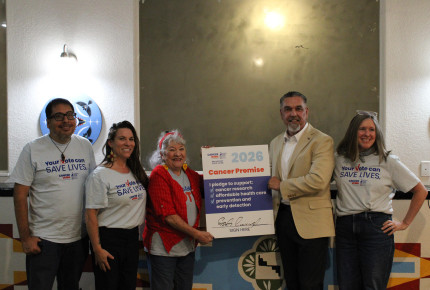 On Tuesday, volunteer advocates with the Ameri
Tucson Cancer Survivors, Advocates Meet with Congressional Candidate JoAnna Mendoza (CD-06) to Discuss Healthcare Ahead of Election
On Thursday, cancer survivors, patients and volunteer advocates with the American Cancer Society Cancer Action Network (ACS CAN) gathered with congressional candidate JoAnna Mendoza to discuss cancer in Arizona and policies that can help in the figh
U.S. Senate Confirms Erica Schwartz as CDC Director
Today, the U.S. Senate voted to confirm Erica Schwartz, M.D., as the next Director of the Centers for Disease Control and Prevention (CDC).
Hawai’i Expands Access to Colorectal Cancer Screening and Treatment with New Law
Gov. Josh Green took a major step toward treating and preventing colorectal cancer in Hawai’i by signing HB 1969 into law which establishes a state-funded financial assistance program to offer screenings for uninsured and underinsured individuals and treatment for uninsured individuals.
Arizona Cancer Advocates Celebrate New Law Expanding Access to No-Cost Breast Cancer Screenings
The American Cancer Society Cancer Action Network (ACS CAN) applauds Gov. Katie Hobbs for signing a bill to improve access and remove financial barriers to lifesaving breast cancer screenings.
Knoxville Goes Smoke-free
KNOXVILLE, Tenn. – May 28, 2026 – The Knoxville city council passed a smoke-free ordinance Tuesday night by a vote of 6-3. The ordinance will ensure thousands of Tennesseans can breathe clean, smoke-free air in most age-restricted venues.
Hawai’i Emerging as Leader in Colorectal Cancer Fight as State Lawmakers Approve Expanded Access to Screenings and Treatment
HONOLULU - On Wednesday, the state Legislature passed a measure to aid in the fight against colorectal cancer as cases and deaths continue to rise in Hawai'i from the disease, particularly in younger people. If signed by Gov.