
Overwhelming Majority of Cancer Patients and Survivors Support Broad Community Immunization and Oppose Limiting Access to Vaccines
Overview
The American Cancer Society Cancer Action Network (ACS CAN) empowers advocates across the country to make their voices heard and influence evidence-based public policy change, as well as legislative and regulatory solutions that will reduce the cancer burden. As part of this effort, ACS CAN deploys surveys to better understand cancer patient and survivor experiences and perspectives, through our Survivor Views research panel. The panel is a group of cancer patients and survivors who respond to regular surveys and provide important insights to support ACS CAN’s advocacy work at all levels of government.
Fielded January 14-25, 2026, our latest survey explores cancer patients’ and survivors’ attitudes toward vaccines. The web-based survey was conducted among 1,445n US cancer patients and survivors who have been diagnosed with or treated for cancer in the last seven years. More methodological detail follows at the end of this report.
Key Findings
- Community immunization is very important to cancer patients and survivors; 88% say it is important for those they encounter in a health care facility to be up to date on vaccinations, and 83% say immunization is important for those in their broader community. 76% oppose states limiting access to vaccines.
- Cancer patients and survivors strongly support school entry vaccine requirements; 86% support vaccine requirements for school entry and only 9% support eliminating them.
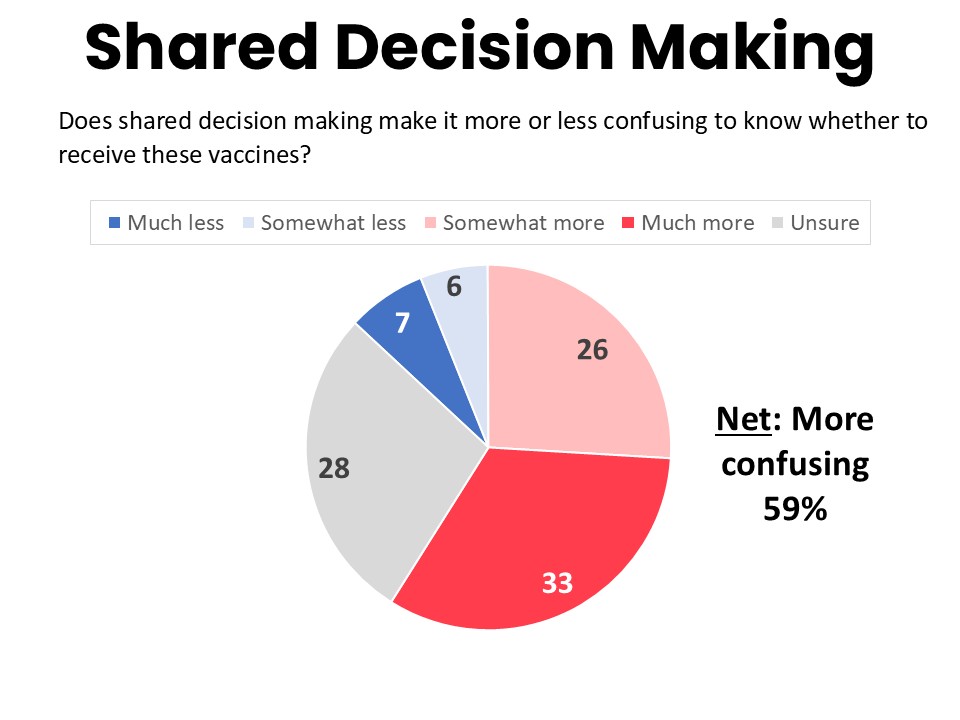
- Over one-third (37%) say recent debate and changes to federal recommendations have led to confusion about which vaccines to get, with 16% skipping or delaying a vaccine they otherwise would have received as a result. A majority (59%) say “shared decision making” has made it more confusing to know what vaccines to get.
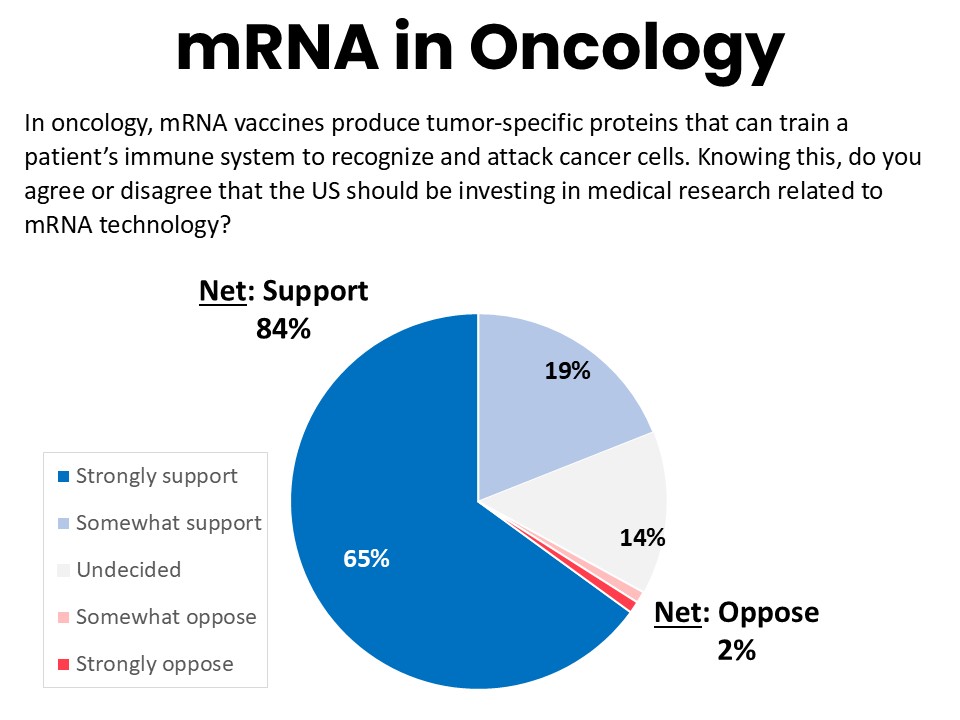
- Cancer patients and survivors overwhelmingly support the potential of vaccines in oncology; including the HPV vaccine in school mandates is supported by a ratio of three-to-one (55% support versus 17% oppose), and 84% agree that the U.S. should be investing in mRNA research.
Detailed Survey Findings
Community Immunization is Very Important to Cancer Patients and Survivors
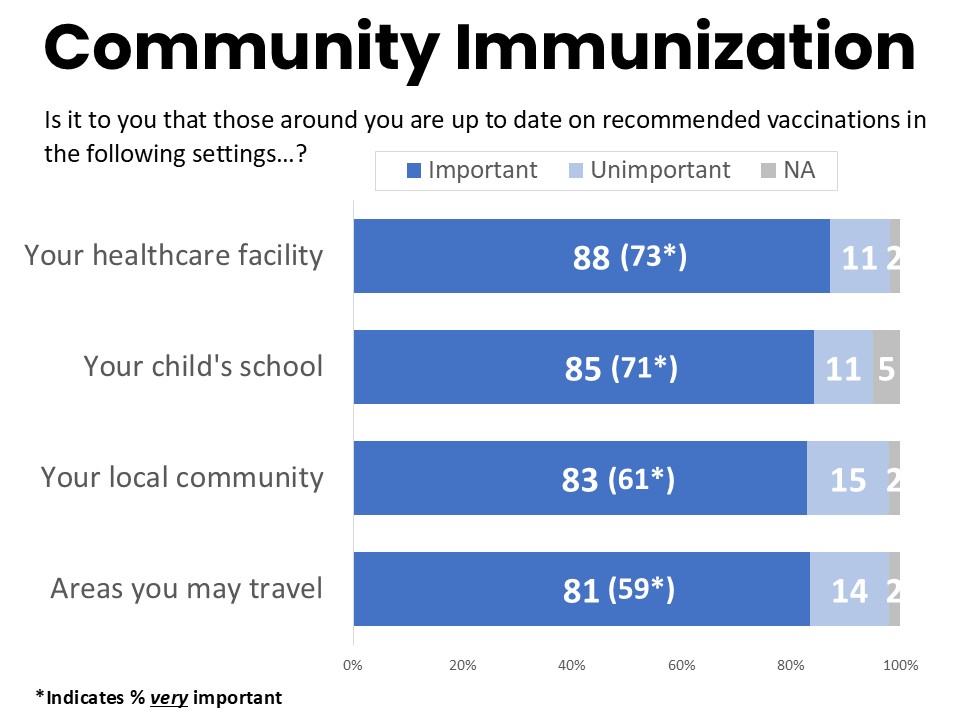
The overwhelming majority of cancer patients and survivors surveyed agree it is important that those around them are up to date on recommended vaccinations. Eighty-eight percent agree that it is important that those they encounter in their health care facilities are vaccinated and 73% say it is very important. Among those with school-aged children, 85% say it is important that those in their child’s school are up to date on vaccinations (71% very important). Eighty-three percent agree it is important for those in their local community to be up to date on vaccines (61% very important), and 81% agree it is important for those in areas they may travel to be up to date on vaccines (59% very important).
The following quote from a survey respondent who is an ovarian cancer survivor represents the concerns of many patients and survivors:
“Infectious diseases are of great concern and herd immunity is important to protect all of us, especially those like myself (ovarian cancer survivor) with chemotherapy-induced immune deficiency.”
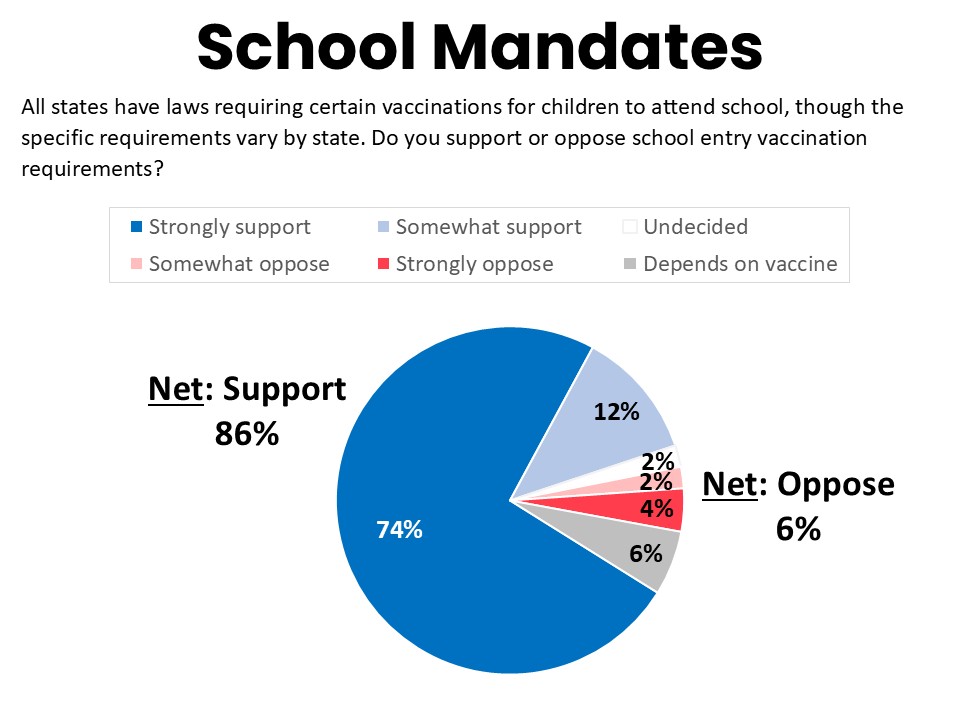
Similarly, 86% of cancer patients and survivors support school entry vaccination requirements, and 74% strongly support them. Just 6% oppose school entry requirements, while another 6% say their position depends on the vaccine.
Cancer patients over age 65 and those who are currently undergoing treatment for their cancer are particularly concerned about maintaining school vaccination rates with roughly nine-in-ten among these groups supporting such mandates. For example, among those age 65 and over, 91% support school vaccination requirements and 83% strongly support them.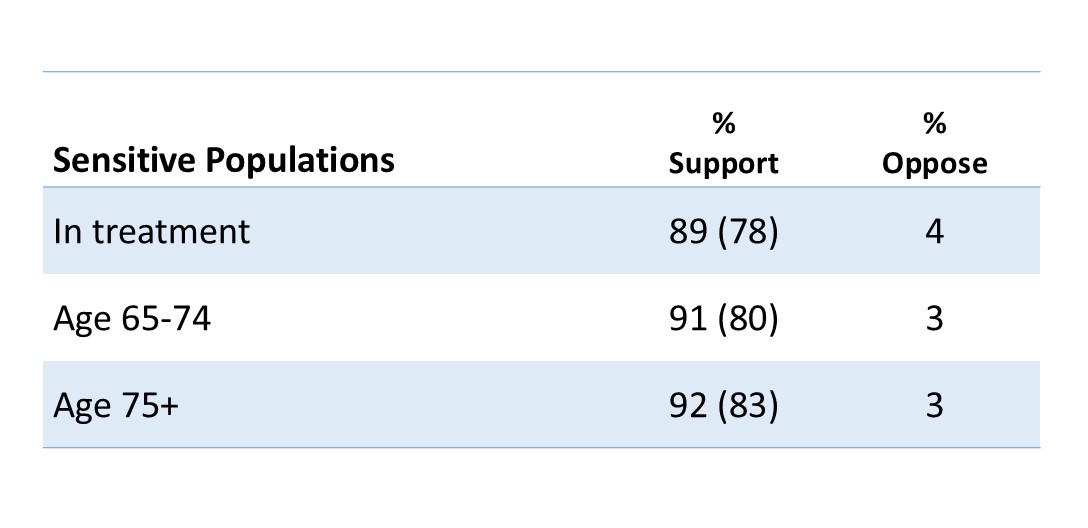
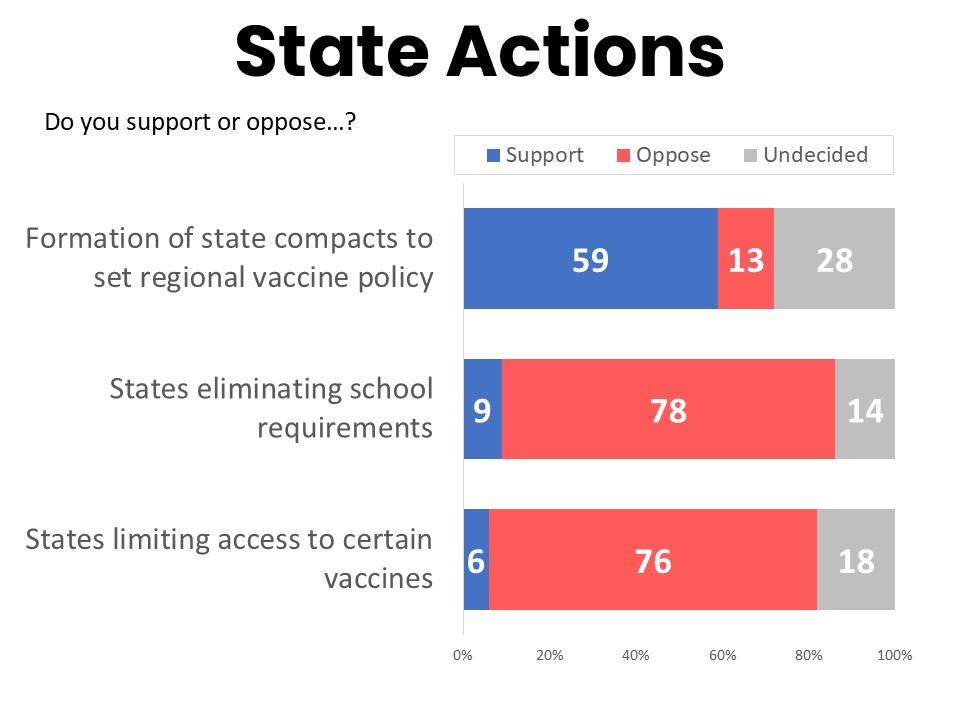
Over three quarters (78%) oppose states eliminating vaccine requirements for schools (63% strongly oppose), while just 9% support eliminating them. Patients and survivors also overwhelmingly oppose states limiting access to certain vaccines, with 76% opposed and 62% strongly opposed. Cancer patients and survivors support the formation of state compacts to set regional vaccine policy by a ratio of more than four to one (59% support, 13% oppose), however 28% have not formed an opinion.
Recent Changes in Vaccine Recommendations Increase Confusion
Cancer patients and survivors report mixed experiences determining whether they should or shouldn’t get certain vaccines. While the majority say it’s generally very easy to determine whether to get a vaccine, 32% say it’s only somewhat easy to navigate. Thirty-seven percent say recent news reports, debate, and changes to federal recommendations have made it confusing to determine whether they should or shouldn’t get certain vaccines, and 16% have skipped or delayed a vaccine they previously would have received as a result. A majority (59%) say recent recommendations calling for shared decision making regarding specific vaccines have made it more confusing for people to know whether they should or shouldn’t receive these vaccines.
Overwhelming Support for the Potential of Vaccines in Oncology
In oncology, mRNA vaccines produce tumor-specific proteins that can train a patient’s immune system to recognize and attack cancer cells. Most cancer patients and survivors (55%) initially say they don’t know enough about mRNA vaccines to have formed an opinion of them, while those who have are more positive by a ratio of three-to-one (35% positive, 11% negative). Given additional information on the application of mRNA vaccines in oncology, 84% of respondents agree that the US should be investing in medical research related to mRNA technology.
Just over a third of cancer patients and survivors (35%) say they don’t know enough about the HPV vaccine to have formed an opinion, but those who have are more positive by a ratio of seven-to-one (58% positive, 8% negative). A majority (55%) support including the HPV vaccine in school entry requirements, while 28% say they don’t know enough about this issue to have an opinion.

The following quote from a breast cancer survivor highlights the feelings shared by many cancer patients and survivors regarding the potential of vaccination in oncology:
“Cancer is a powerful, aggressive killer. What a dramatic change it would be to so many aspects of medical care and human life if we could be proactive with cancer instead of only reactive. Cancer treatment is expensive for the health insurers and the patients. Cancer survivors can be changed for the rest of their lives. Being proactive with cancer would make all the difference in life quality.”
Health Care Providers Are Most Trusted Source of Information
Eighty-five percent of cancer patients and survivors say they get information about vaccines from their doctor, pharmacist, or other health care provider, and 82% say they have a “great deal” of trust in their provider when it comes to providing reliable information about vaccines. Providers are the most heavily relied upon information source, with the next most frequently-cited source, the CDC, cited by 28%. By comparison, just 29% say they have a “great deal” of trust in CDC when it comes to providing reliable information about vaccines.
While fewer than a quarter of respondents say they get information about vaccines from medical associations and patient advocacy groups, they are the most trusted sources for vaccine information after health care providers. Fifty-seven percent report a great deal of trust in patient advocacy groups and 48% report a great deal of trust in medical associations.
Methodology
ACS CAN’s Survivor Views research initiative was designed to support the organization’s efforts to end suffering and death from cancer through public policy advocacy. Data provided by cancer patients and survivors as part of this project allows for a greater understanding of their experiences and opinions on cancer-related issues and gives voice to cancer patients and survivors in the shaping and advocating of public policies that help prevent, detect, and treat cancer and promote a more positive quality of life for those impacted.
To ensure the protection of all participants in this initiative all research protocols, questionnaires, and communications are reviewed by the Morehouse School of Medicine Institutional Review Board.
The survey population is comprised of individuals who meet the following criteria:
- Diagnosed with and/or treated for cancer within the last seven years
- Over the age of 18 (parents of childhood cancer survivors were invited to participate on behalf of their minor children)
- Reside in the US or US territories
Survivor Views participants are invited to participate through email, direct mail, social media, and outreach to communities and partners engaged with cancer patients and survivors. Those who agree to participate after reviewing the informed consent information are invited to join the Survivor View’s research cohort and participate in future surveys. This survey also includes cancer patients and survivors nationwide from probability and non-probability panels. The data for this survey were collected between January 14-25, 2026. A total of 1,445 participants responded to the survey.
About ACS CAN
The American Cancer Society Cancer Action Network (ACS CAN) advocates for evidence-based public policies to reduce the cancer burden for everyone. We engage our volunteers across the country to make their voices heard by policymakers at every level of government. We believe everyone should have a fair and just opportunity to prevent, detect, treat, and survive cancer. Since 2001, as the American Cancer Society’s nonprofit, nonpartisan advocacy affiliate, ACS CAN has successfully advocated for billions of dollars in cancer research funding, expanded access to quality affordable health care, and advanced proven tobacco control measures. We stand with our volunteers, working to make cancer a top priority for policymakers in cities, states and our nation’s capital. Join the fight by visiting www.fightcancer.org.
