Rep. Juan Ciscomani Discusses Healthcare with Cancer Advocates Ahead of Election
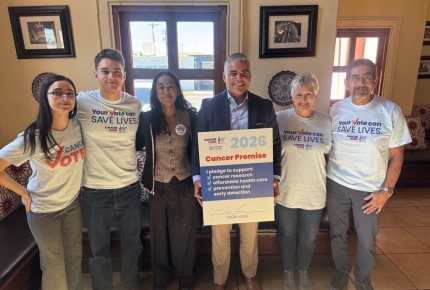 On Friday, volunteer advocates with the

WASHINGTON, D.C. – August 19, 2026 – According to a new American Cancer Society Cancer Action Network (ACS CAN) survey, 89% of cancer patients and survivors say they would be more likely to participate in a clinical trial outside their local area if trial sponsors helped them organize or pay for travel and lodging to offset the extra travel. The latest Survivor Views survey highlights how cost and geographic barriers impact clinical trial participation and suggests many cancer patients and survivors would be more likely to participate if those barriers were addressed.
The survey shows distance to trial location (93%), frequency of trial visits (92%) and non-medical costs such as travel (90%) are all important factors when considering participation in a trial. These barriers can result in clinical trial underrepresentation from groups like older adults, people with limited incomes, people who live in rural areas and certain racial and ethnic groups.
According to the survey, among those who initially said they were unsure about their willingness to participate in a trial, 87% said they would be more willing to participate if the trial sponsor offered financial support for costs of participation, and even among those who initially said they would not be willing, more than half said they would be more likely to participate if financial support for participation costs was offered. Yet, 63% of cancer clinical trial participants surveyed did not receive financial support from trial sponsors for transportation, lodging, food or other participation-related costs.
“Clinical trials are critical to advancing breakthroughs that can help people better prevent, detect, treat and survive cancer and other life-threatening diseases. Unfortunately, they are not accessible to everyone,” said Lisa A. Lacasse, president of the American Cancer Society Cancer Action Network. “These survey findings show that cost and travel distance are very real barriers to trial participation and point to the need for policy solutions that will help address these barriers and make potentially lifesaving advances more accessible.”
Additionally, 83% of survey respondents feel it would be ethical for participants in clinical trials to receive financial support from trial sponsors to offset travel, lodging and food costs incurred as part of participating in a trial, and only 1% are concerned this is unethical. Meanwhile, 75% say it is unethical for patients participating in clinical trials to have to pay more out of pocket than they would for standard care.
The findings come as Congress considers the Clinical Trial Modernization Act (S. 4440/H.R. 3521), bipartisan, bicameral legislation that would allow clinical trial sponsors to provide financial support to patients for expenses associated with their trial participation, including medical costs like copays and non-medical costs such as travel, parking, food and lodging. It would also allow trial sponsors to provide patients with the technology needed to facilitate remote participation in clinical trials.
Moreover, the legislation would amend the Internal Revenue Code to protect patients who receive financial support for trial participation from surprise tax bills or from losing eligibility for programs many rely on for healthcare and other basic needs by ensuring that up to $2,000 of otherwise taxable support payments are not considered income.
“The evidence shows the critical need for legislation like the Clinical Trial Modernization Act to improve accessibility to and representation in clinical trials,” said Lacasse. “We urge Congress to pass this legislation that can significantly reduce the cost and geographic barriers that have prevented far too many patients from participating in clinical trials that are essential for developing promising and potentially lifesaving treatments.”
The survey of 1,015 cancer patients and survivors nationwide who have been diagnosed with or treated for cancer in the last seven years was conducted between July 9-25, 2026.
Read the full polling memo.
###
About ACS CAN
The American Cancer Society Cancer Action Network (ACS CAN) advocates for evidence-based public policies to reduce the cancer burden for everyone. We engage our volunteers across the country to make their voices heard by policymakers at every level of government. We believe everyone should have a fair and just opportunity to prevent, detect, treat, and survive cancer. Since 2001, as the American Cancer Society’s nonprofit, nonpartisan advocacy affiliate, ACS CAN has successfully advocated for billions of dollars in cancer research funding, expanded access to quality affordable health care, and advanced proven tobacco control measures. We stand with our volunteers, working to make cancer a top priority for policymakers in cities, states and our nation’s capital. Join the fight by visiting www.fightcancer.org.
On Friday, volunteer advocates with the