**MEDIA ADVISORY FOR SATURDAY EVENT**
HUNTSVILLE, Ala. – Cancer patients, survivors and loved ones will gather Saturday at 6 p.m. for the first Hope Run to celebrate cancer survivorship and honor those who’ve passed away from the disease.

WASHINGTON, D.C. – MAY 1, 2026 – A new bill that would improve access to clinical trials was recently introduced in the U.S. Senate. Sponsored by Senators Tim Scott (R-S.C.) and Mark Warner (D-Va.), the Clinical Trial Modernization Act (S. 4440) would help reduce cost and geographic barriers, making it easier for patients to take part in clinical trials. U.S. Representatives Raul Ruiz (D-Calif.) and August Pfluger (R-Texas) introduced the House version (H.R. 3521) of this legislation in May 2025.
Approximately 20% of cancer clinical trials fail due to inadequate enrollment and increasingly, pharmaceutical trials are moving overseas to recruit patients. Studies show that cost as well as length and frequency of travel to clinical trial sites are commonly cited by patients as barriers to trial participation. The provisions in the Clinical Trial Modernization Act will help ease these burdens of participation. Too often these hardships result in underrepresentation from groups like older adults, people with limited incomes, people who live in rural areas and certain racial and ethnic groups.
The bill would enable clinical trial sponsors to provide financial support to patients for trial-related costs so participation does not create an additional financial burden. The financial support would cover medical expenses such as copays and non-medical expenses such as travel, parking, food and lodging. It would also allow trial sponsors to provide patients with the necessary technology that would allow for remote participation in clinical trials, ensuring this type of support is explicitly permitted within current federal anti-kickback laws.
“Clinical trials are critical to advancing new, breakthrough cancer treatments that can improve survival and quality of life for people with cancer and other life-threatening diseases, but not everyone has access to them,” said Lisa A. Lacasse, president of the American Cancer Society Cancer Action Network. “The Clinical Trial Modernization Act would remove cost and geographic obstacles that have prevented far too many patients from accessing potentially lifesaving advances.”
The legislation would also amend the Internal Revenue Code to ensure that the financial support clinical trial sponsors provide to patients — such as stipends or per diem reimbursements of up to an annual total of $2,000 — is not treated as taxable income and does not count toward income eligibility for programs such as Medicaid.
Additionally, the bill would allow the U.S. Department of Health and Human Services (HHS) to issue grants for community education, outreach and recruitment efforts to encourage more participation from communities who are underrepresented in clinical trials. Grant-eligible activities would include working with local trial sites like community health centers, training health care personnel and clinical trial investigators, engaging community stakeholders to promote clinical trial participation and building partnerships with community-based organizations.
“The Clinical Trial Modernization Act will help improve access to lifesaving clinical trials, which is essential to reducing the cancer burden for everyone,” said Lacasse. “We urge Congress to pass it into law.”
###
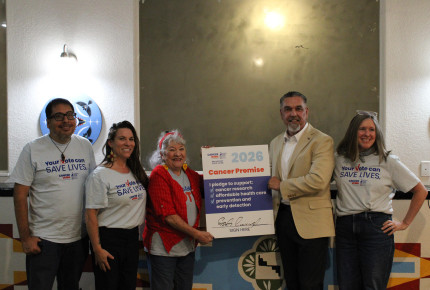 On Tuesday, volunteer advocates with the Ameri