Rep. Juan Ciscomani Discusses Healthcare with Cancer Advocates Ahead of Election
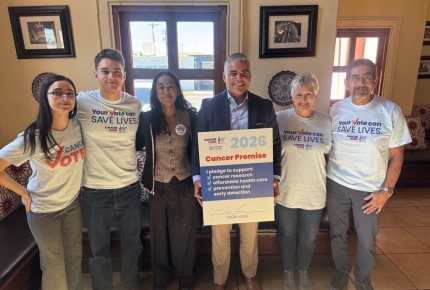 On Friday, volunteer advocates with the

In late May, the Office of Management and Budget (OMB) released a proposed rule that would fundamentally change how federal grants and contracts would be awarded and managed, opening the door for interference and jeopardizing federal research investments. These changes would affect work funded by the National Institutes of Health and the Centers for Disease Control and Prevention, among others, which are critical agencies in the fight against cancer.
The following is a statement from Shane Jacobson, CEO of the American Cancer Society (ACS) and the American Cancer Society Cancer Action Network (ACS CAN), reacting to the proposed rule:
“ACS CAN has serious concerns about the chilling effect this proposed rule could have on the research ecosystem, as it reduces the role of established scientific review processes in funding decisions. The changes included in the rule would require appointed officials to approve, deny or cancel funding for contracts and grants based on opaque non-scientific criteria rather than scientific potential to achieve breakthroughs that can improve outcomes and save lives.
“Codifying shifting policy preferences into formal federal regulations risks triggering repeated cycles of overhaul with each change in administration. Such back-and-forth would create a chronically unpredictable environment, making it extremely difficult for institutions and investigators to plan and sustain the multi-year, long-term research essential to clinical trials and breakthrough discoveries that patients urgently need. It could also drive research investment to other countries where policies are more stable.
“ACS CAN believes that federal investment in scientific research should be awarded based on merit. According to the ACS’ Cancer Facts and Figures report, more than 4.8 million lives have been saved from cancer since 1991, an accomplishment that has been made possible by research discoveries that have transformed the way we prevent, detect and treat cancers. Investing in promising research that is relevant, rigorous, evidence-based and peer-reviewed directly influences our downstream ability to deliver care that save lives.
“We must continue to work to close gaps in cancer outcomes and are also concerned that the proposal could halt research into reducing the differences in cancer incidence and mortality. Cancer affects everyone, but it does not impact everyone equally. Evidence of cancer disparities between demographic groups is well established, and only through intentional research in these populations will we understand how to best address these inequities and improve outcomes.
“ACS CAN urges the administration to reconsider this proposed rule so that we can continue to accelerate progress against cancer and will work with policymakers and public health officials to help them understand the harmful impact these changes can have for cancer patients, survivors and their families.”
On Friday, volunteer advocates with the