Overview:
The American Cancer Society Cancer Action Network (ACSA CAN) empowers advocates across the country to make their voices heard and influence evidence-based public policy change, as well as legislative and regulatory solutions that will reduce the cancer burden. As part of this effort, ACS CAN deploys surveys to better understand cancer patient and survivor experiences and perspectives, through our Survivor Views research panel. The panel is a group of cancer patients and survivors who respond to regular surveys and provide important insights to support ACS CAN’s advocacy work at all levels of government.
Fielded July 1-21, 2026, our latest survey explores the impacts of cancer on patients and survivors related to working, attending school and volunteering. This survey provides important context as federal and state governments implement a new Medicaid policy that requires enrollees and applicants to prove they are working, attending school or volunteering or prove they should be exempt from the requirement. The web-based survey was conducted among 1,659 cancer patients and survivors nationwide who have been diagnosed with or treated for cancer in the last seven years, including 1,024 who were working at the time of their diagnosis and 1,054 who worked prior to or during their cancer treatment. More methodological detail follows at the end of this report.
Key Findings:
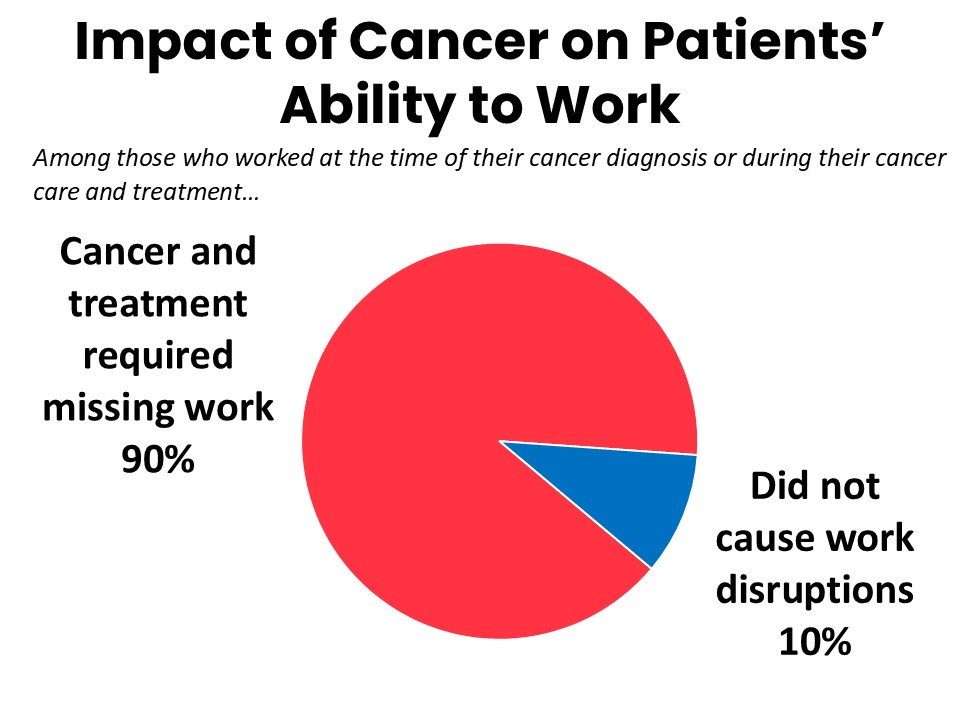
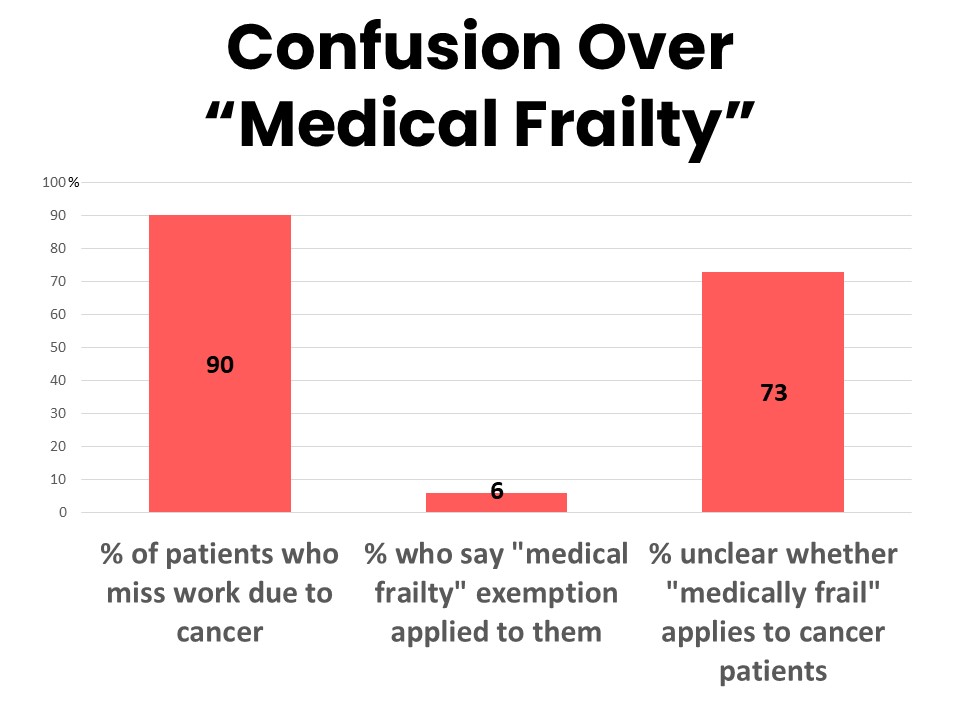
- An overwhelming majority (90%) of cancer patients and survivors report that their cancer or care and treatment required them to miss hours of work, school or volunteering. These disruptions continued into survivorship for nearly a third (32%).
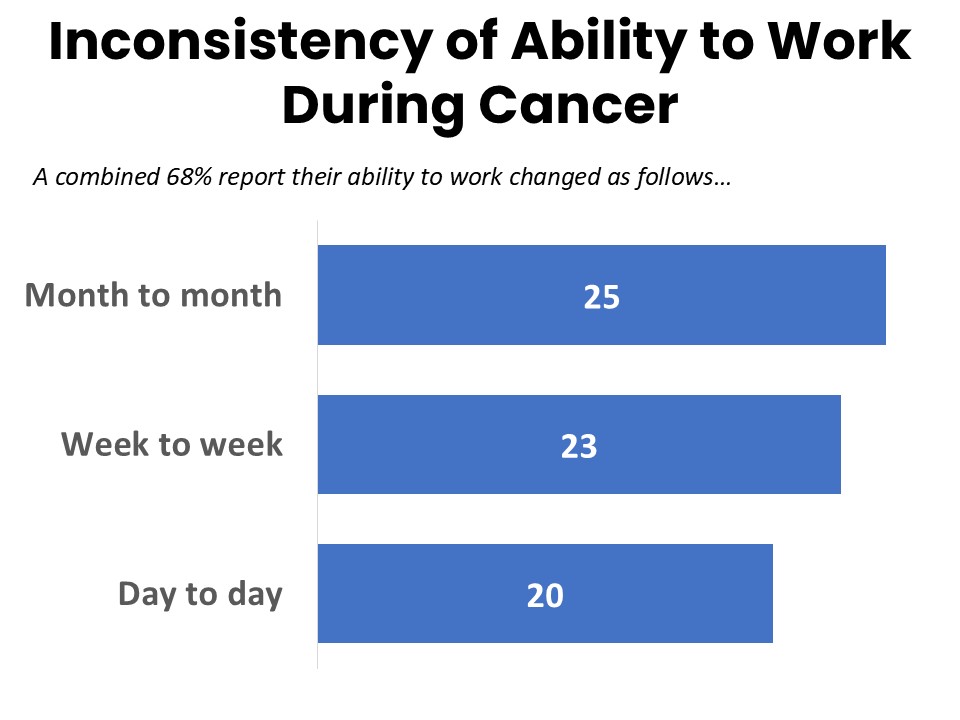
- Seventy-two percent had to miss over a month of work or other activities, and 42% percent had to miss thirteen or more weeks. For most (68%), the disruptions were not consistent, but fluctuated by the month, week, or even day.
- Over two-thirds (68%) of respondents say if they had to prove with documentation that they were working, attending school or volunteering at least 80 hours per month to qualify for health care coverage, they would be concerned about losing their coverage, with 50% saying they would be very concerned.
- Three quarters (75%) said it would be difficult for a cancer patient undergoing treatment to successfully submit paperwork within a 30-day window proving their cancer made them unable to work, attend school or volunteer. Key reasons include:
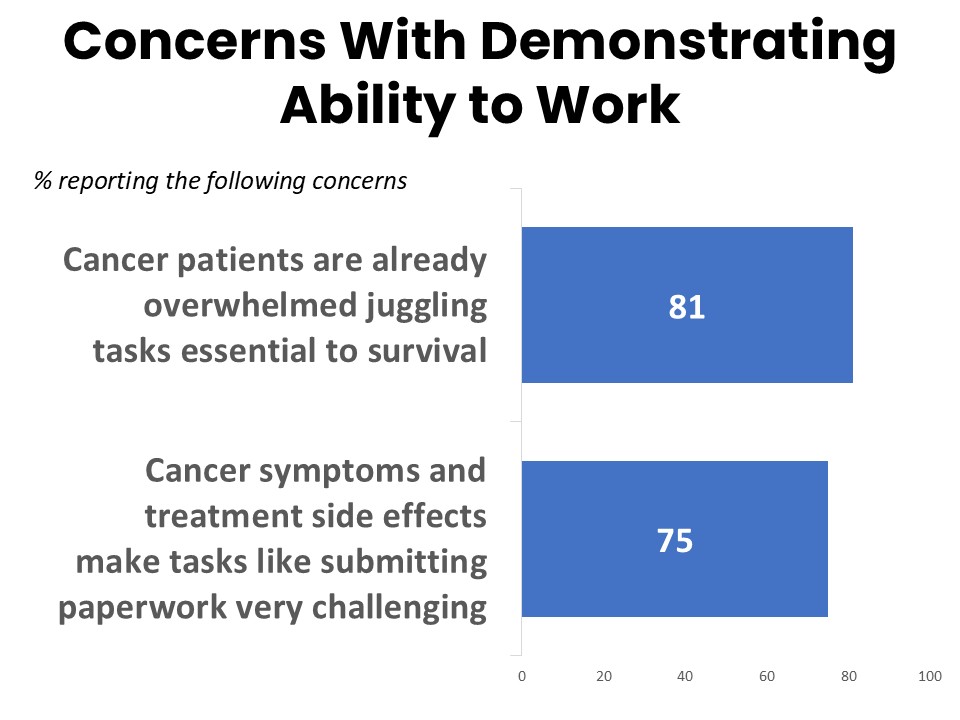
- 81% say patients are already overwhelmed with juggling tasks essential to their survival
- 75% say symptoms and side effects make tasks like submitting paperwork very challenging
- When presented with a list of circumstances typically associated with exemption from the Medicaid work requirement, the majority (63%) did not understand any of the potential exemptions as applying to them despite the significant interruptions cancer posed to their ability to work.
- Seventy-three percent feel it isn’t clear whether the term “medically frail” applies to cancer patients.
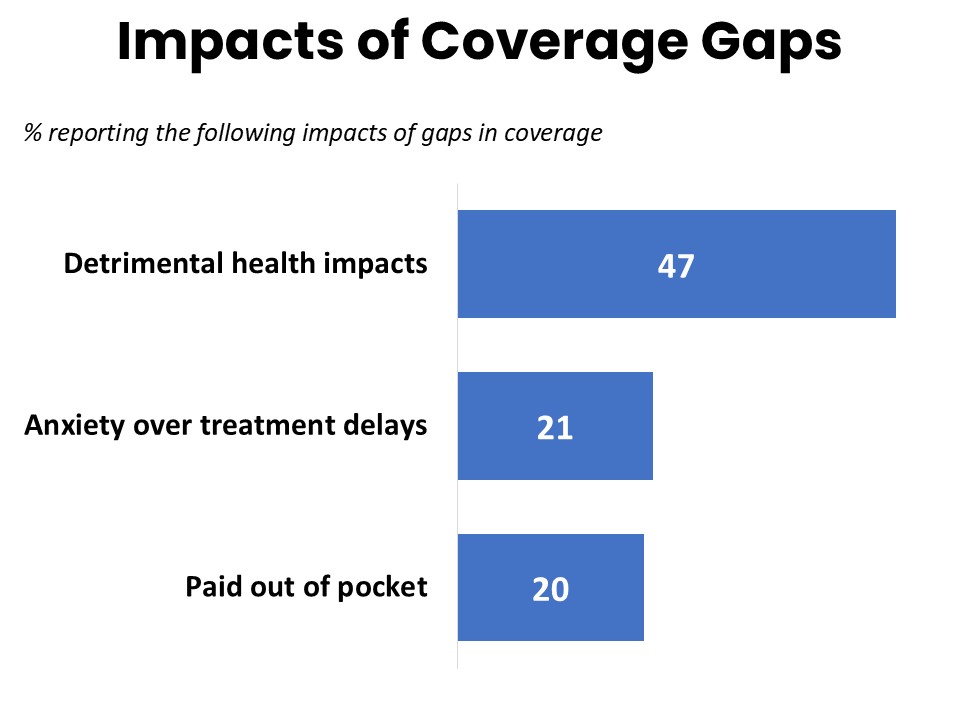
- When faced with coverage gaps or uncertainty about whether they will be able to keep their coverage, 47% of cancer patients and survivors report impacts detrimental to their health, such as delays in diagnosis, going without care, declining health, and worsening of their cancer.
Detailed Survey Findings:
Overwhelming Majority Report Cancer and Treatment Required Them to Miss Hours of Work
Ninety percent of the 1,054 working cancer patients surveyed say their cancer or their care and treatment required them to miss hours of work, school, or volunteering they would have otherwise attended. Furthermore, 32% continued to experience these disruptions after they completed active treatment and into survivorship. Throughout the survey, Medicaid enrollees respond statistically the same as the total survey sample but there is some variation by type of coverage. For example among Medicaid enrollees, who often can least afford to miss work, 90% report their cancer causing disruptions to their ability to work, compared to 93% of those enrolled in employer-provided coverage.
The amount of work cancer patients have to miss due to their cancer is significant, but often not consistent. Seventy-two percent had to miss over a month or work and 42% missed three months or more. A total of 68% report their ability to work fluctuating, with 25% reporting it changed month-by-month, 23% saying it changed for them on a week-by-week basis, and 20% saying their ability to work changed day-by-day.
Eighty-one percent of survey respondents were working for pay at the time of their diagnosis and among those who weren’t, 12% were full time caregivers, 4% were seeking work, and 3% were regular volunteers contributing at least 20 hours per week. The vast majority of those working at the time of their diagnosis were working full time (85%). Significantly fewer however (66%), continued working during their cancer care and treatment despite the fact that 73% would have preferred to continue working even if they’d had to work less for a while to accommodate their treatment.
“I'm hoping to return to additional employment when I’m feeling able and have healed enough, especially as treatments and time off have been EXTREMELY financially devastating. But I do NOT feel work requirements for cancer patients should be enforced at all. Every person, every cancer journey is different and affects each of us differently. The mental and emotional strain is just as hard as the medical fight for one's life.”
-a breast cancer survivor in Idaho
Cancer Symptoms and Treatment Side Effects Can Be Very Disruptive to Patients’ Lives
Eighty-one percent of those surveyed report experiencing a loss of energy that limits daily activity, and 53% faced anxiety. Memory loss and loss of mental focus and limitations in physical function (such as trouble walking using arms or legs, or doing daily activities) were each experienced by 50% of cancer patients and survivors. Forty-four percent experienced nausea and related gastrointestinal symptoms while neuropathy and depression were experienced by 42% and 41% respectively. Another 39% experienced pain that limits work, time with family, or social activities. These impacts on cancer patients not only cause disruptions to work but also make demonstrating exemptions from work requirements challenging.
“Fighting cancer takes up all your energy. A person should be able to focus on fighting cancer, not filling out endless forms or worrying about whether they would lose their jobs or afford treatment.”
-a breast cancer patient in Connecticut
Three Quarters Feel It Would Be Difficult for Cancer Patients to Meet Burden of Proof for Working or Qualifying for an Exemption
New requirements in Medicaid will require enrollees and new applicants to prove they are working, going to school or volunteering at least 80 hours per month; or prove they qualify for an exemption to the requirement. If documentation is needed, they will have to provide it within a 30-day window. The survey finds that not only are cancer patients often unable to work, attend school or volunteer the number of hours required by new Medicaid work requirements, but the burden of proving they should be exempt would be insurmountable for many.
“It is hard enough to focus on the treatment, our family, our daily commitments and trying to be 'normal' during those times. Any extra red tape seems unimaginable.”
-a breast cancer patient in California
Three quarters (75%) said it would be difficult for a cancer patient undergoing treatment to successfully submit paperwork within a 30-day window proving their cancer made them unable to work, attend school or volunteer. This is especially hard for those cancer patients who are also caregivers. Among those who are caregivers for adult dependents, 78% say this would be difficult. Over two-thirds (68%) of respondents say if they had to prove with documentation that they were working, attending school or volunteering at least 80 hours per month to qualify for health care coverage, they would be concerned about losing their coverage, with 50% very concerned. Among Medicaid enrollees, 82% say they would be worried about losing their coverage and 58% would be very concerned.
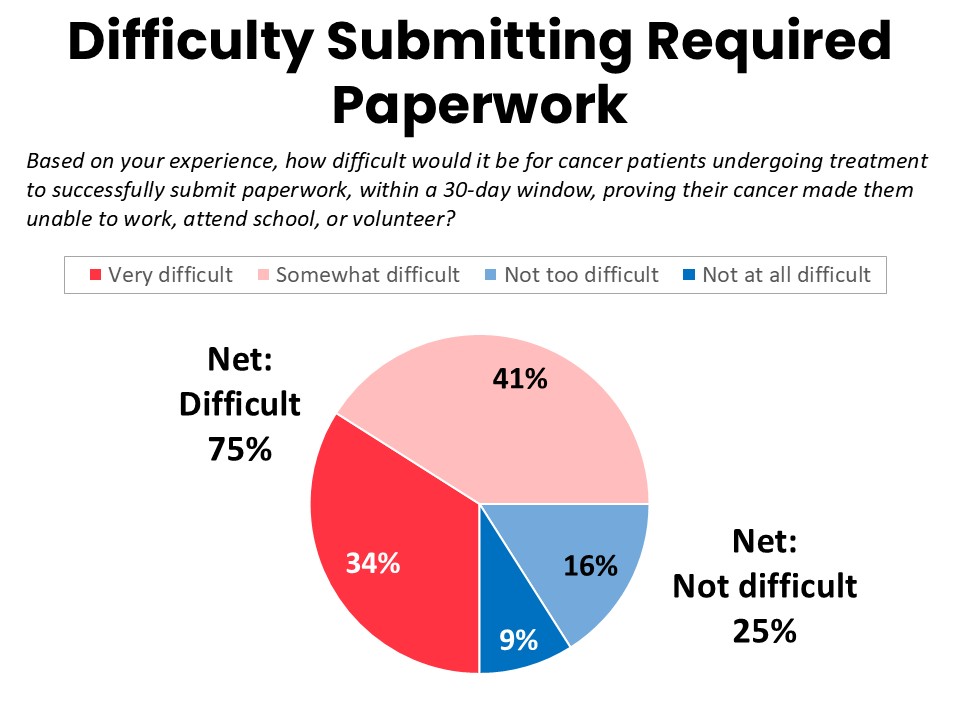
Cancer patients and survivors report several significant concerns related to applying for and proving they should be exempt from these requirements. Eighty-one percent say cancer patients are often already overwhelmed with juggling many tasks essential to their survival. Three quarters (75%) say cancer symptoms and side effects of treatment can make tasks like submitting additional paperwork very challenging.
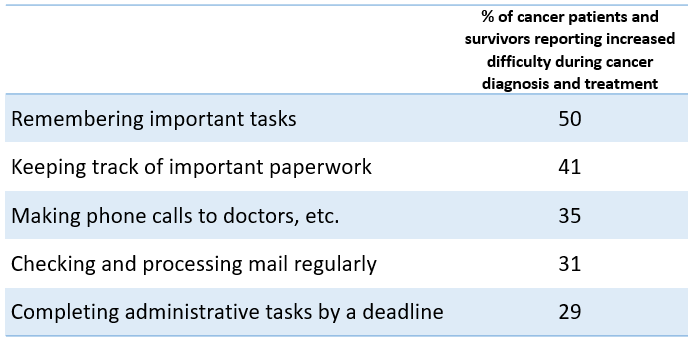
The same number (75%) also agreed with the statement “While I was going through my cancer diagnosis and treatment, I found it hard to focus on or remember tasks that were not directly related to my cancer.” Two-thirds (67%) reported finding it harder to perform many administrative tasks during cancer diagnosis and treatment. The table below outlines the specific tasks most frequently made more difficult during cancer diagnosis and treatment:
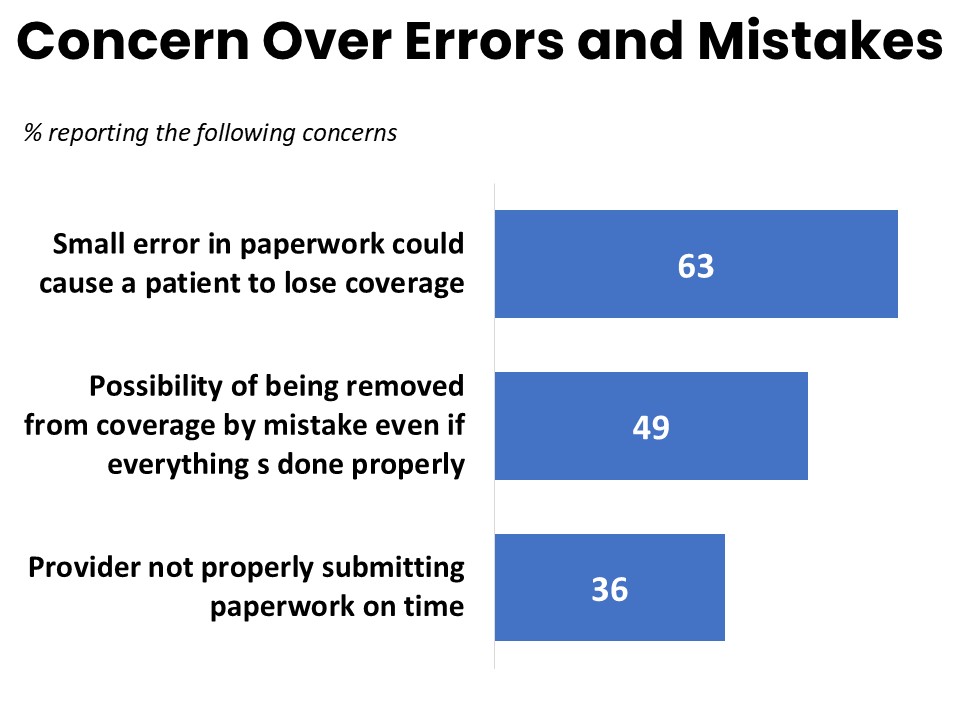
Cancer patients and survivors are also concerned about the potential for errors or mistakes. Sixty-three percent are concerned that a small error in paperwork could cause a patient to lose coverage, while 49% worry that this process opens up the possibility that their state may remove them from coverage even if they did everything correctly (52% of Medicaid enrollees are worried about this). Another 36% are concerned about their provider’s office not properly submitting paperwork required to prove an exemption within the required 30-day timeframe.
A majority (56%) of cancer patients and survivors feel it would be difficult for patients undergoing treatment to obtain certification that may be required from their doctor’s office within a 30-day window attesting that they have a serious or complex medical condition making them unable to work, volunteer, or attend school. One-third (32%) are concerned this would take away from the limited time they have with their provider which is essential to their care. Thirty percent are unsure how well their provider can assess their ability to work, and 20% don’t want this discussion to interfere with their relationship with their doctor.
“Medical Frailty” Terminology Causes Confusion That Leaves Out Patients Who Are Unable to Work Due to Their Cancer
When cancer patients and survivors were presented with a list of conditions or circumstances typically associated with exemption from Medicaid work requirements, the majority (63%) did not understand any of the potential exemptions as applying to them despite the significant interruptions cancer posed to their ability to work. Nearly three quarters (73%) felt it was unclear whether the term “medically frail” applies to cancer patients. Only 6% interpreted the “medical frailty” exemption to apply to them during their cancer treatment, despite the overwhelming majority reporting their cancer required them to miss work.
The impacts of any coverage gaps or uncertainty in coverage that arise out of challenges and confusion with this requirement further compound the burden on patients. Among the 338 patients in the survey who have experienced gaps or uncertainty in coverage, 47% experienced impacts detrimental to their health including going without care, delayed diagnosis, declining physical health, their cancer worsening, and being unable to control pain or other side effects. One in five (21%) felt significant anxiety over time lost to delays in accessing life-saving treatment and 20% paid for care out of pocket, which is not possible for many cancer patients and would add significant strain or medical debt for low-income Medicaid enrollees.
“It is a very complex system to navigate even when things are working as they’re supposed to. Adding more complexity will cost lives.”
-a blood cancer survivor in Washington
Methodology:
ACS CAN’s Survivor Views research initiative was designed to support the organization’s efforts to end suffering and death from cancer through public policy advocacy. Data provided by cancer patients and survivors as part of this project allows for a greater understanding of their experiences and opinions on cancer-related issues and gives voice to cancer patients and survivors in the shaping and advocating of public policies that help prevent, detect, and treat cancer and promote a more positive quality of life for those impacted.
To ensure the protection of all participants in this initiative, all research protocols, questionnaires, and communications are reviewed by the Morehouse School of Medicine Institutional Review Board. The survey population is comprised of individuals who meet the following criteria:
- Diagnosed with and/or treated for cancer within the last seven years
- Over the age of 18 (parents of childhood cancer survivors were invited to participate on behalf of their minor children)
- Reside in the US or US territories
Survivor Views participants are invited to participate through email, direct mail, social media, and outreach to communities and partners engaged with cancer patients and survivors. Those who agree to participate after reviewing the informed consent information are invited to join the Survivor Views research cohort and participate in future surveys. The data for this survey were collected between July 1-21, 2026. The 1,659 survey respondents included 1,259 participants from the Survivor Views cohort, as well as an oversample of 400 lower income respondents, yielding a total of 189 Medicaid enrollees included in the survey. Data derived from the lower income and Medicaid-enrolled respondents was analyzed separately and did not differ with statistical significance from the 1,259 Survivor Views cancer patient and survivor population. This document primarily reports the findings of the 1,259 Survivor Views population except where noted. Among this group, 1,024 were working at the time of their diagnosis and a total of 1,054 worked or were engaged in volunteering at least 20 hours per week prior to or during their cancer treatment.
About ACS CAN
The American Cancer Society Cancer Action Network (ACS CAN) advocates for evidence-based public policies to reduce the cancer burden for everyone. We engage our volunteers across the country to make their voices heard by policymakers at every level of government. We believe everyone should have a fair and just opportunity to prevent, detect, treat, and survive cancer. Since 2001, as the American Cancer Society’s nonprofit, nonpartisan advocacy affiliate, ACS CAN has successfully advocated for billions of dollars in cancer research funding, expanded access to quality affordable health care, and advanced proven tobacco control measures. We stand with our volunteers, working to make cancer a top priority for policymakers in cities, states and our nation’s capital. Join the fight by visiting
www.fightcancer.org.