
Marketplace Open Enrollment 2026
There have been a number of changes to Marketplace Open Enrollment for plan year 2026. This factsheet is designed to help consumers as they navigate their options.

The American Cancer Society Cancer Action Network (ACS CAN) empowers advocates across the country to make their voices heard and influence evidence-based public policy change, as well as legislative and regulatory solutions that will reduce the cancer burden. As part of this effort, ACS CAN deploys surveys to better understand cancer patient and survivor experiences and perspectives, through our Survivor Views research panel. The panel is a group of cancer patients and survivors who respond to regular surveys and provide important insights to support ACS CAN’s advocacy work at all levels of government.
Fielded October 24-November 16, 2025, our latest survey explores the impact of Affordable Care Act (ACA) health care tax credits on cancer patients and survivors. The web-based survey was conducted among 1,707n cancer patients and survivors nationwide who have been diagnosed with or treated for cancer in the last seven years. More methodological detail follows at the end of this report.
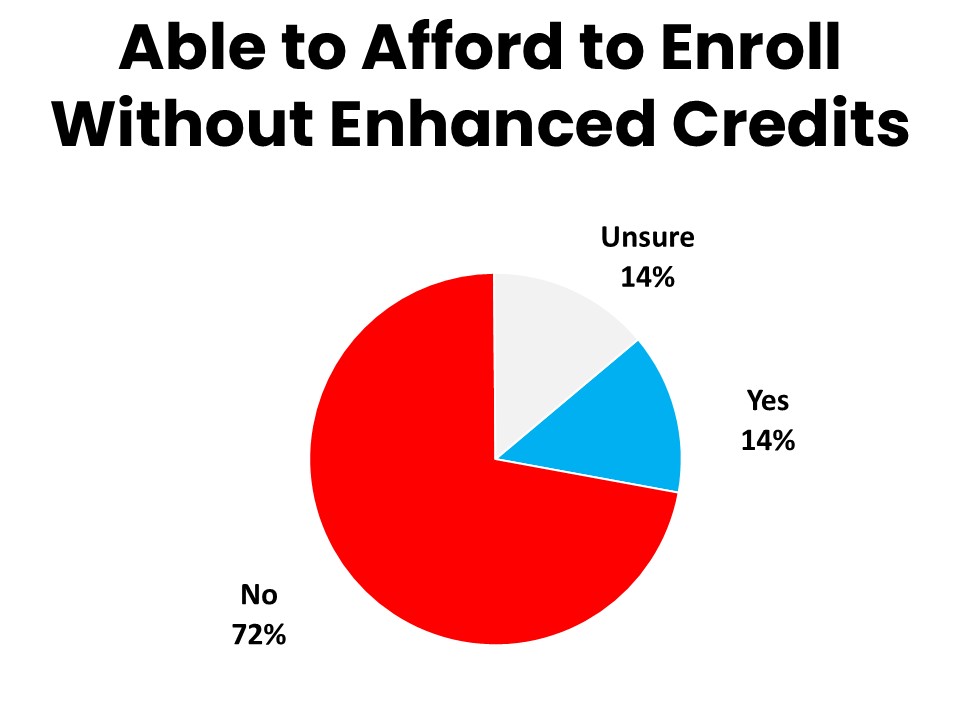
Seventy-two percent of those enrolled in Marketplace plans who recall benefitting from premium tax credits say they would not have been able to afford to enroll in a health care plan without them. Another 14% are unsure.
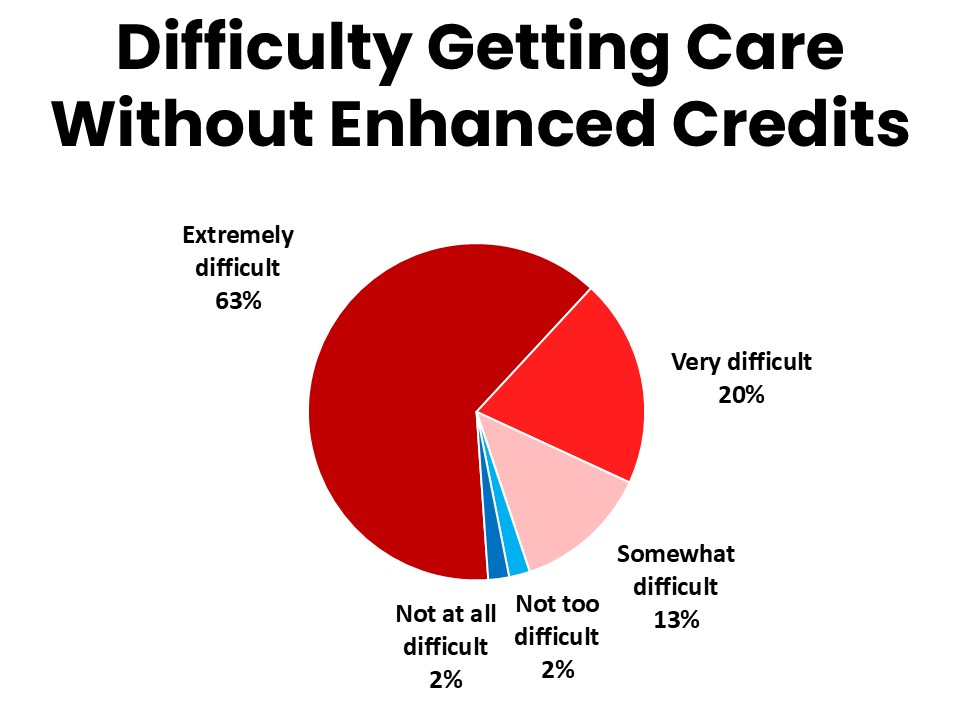
Among those currently enrolled who recall receiving enhanced premium tax credits, 96% say it would be difficult to get the care they need if the enhanced tax credits expire and are no longer available to help lower their health premiums. One third (33%) say it would be very or somewhat difficult to get their care without the tax credits and 63% say it would be extremely difficult.
Residents in rural communities are particularly likely to say it would be extremely difficult to get the care they need if the credits expire. More than three-quarters of rural residents (76%) say it would be extremely difficult compared to 52% of those residing in suburban areas.
ACS CAN’s Survivor Views research initiative was designed to support the organization’s efforts to end suffering and death from cancer through public policy advocacy. Data provided by cancer patients and survivors as part of this project allows for a greater understanding of their experiences and opinions on cancer-related issues and gives voice to cancer patients and survivors in the shaping and advocating of public policies that help prevent, detect, and treat cancer and promote a more positive quality of life for those impacted.
To ensure the protection of all participants in this initiative all research protocols, questionnaires, and communications are reviewed by the Morehouse School of Medicine Institutional Review Board.
The survey population is comprised of individuals who meet the following criteria:
Survivor Views participants are invited to participate through email, direct mail, social media, and outreach to communities and partners engaged with cancer patients and survivors. Those who agree to participate after reviewing the informed consent information are invited to join the Survivor View’s research cohort and participate in future surveys. This survey also includes cancer patients and survivors nationwide from probability and non-probability panels. The data for this survey were collected between October 24-November 16, 2025. A total of 1,707 participants responded to the survey.
About ACS CAN
The American Cancer Society Cancer Action Network (ACS CAN) advocates for evidence-based public policies to reduce the cancer burden for everyone. We engage our volunteers across the country to make their voices heard by policymakers at every level of government. We believe everyone should have a fair and just opportunity to prevent, detect, treat, and survive cancer. Since 2001, as the American Cancer Society’s nonprofit, nonpartisan advocacy affiliate, ACS CAN has successfully advocated for billions of dollars in cancer research funding, expanded access to quality affordable health care, and advanced proven tobacco control measures. We stand with our volunteers, working to make cancer a top priority for policymakers in cities, states and our nation’s capital. Join the fight by visiting www.fightcancer.org.